
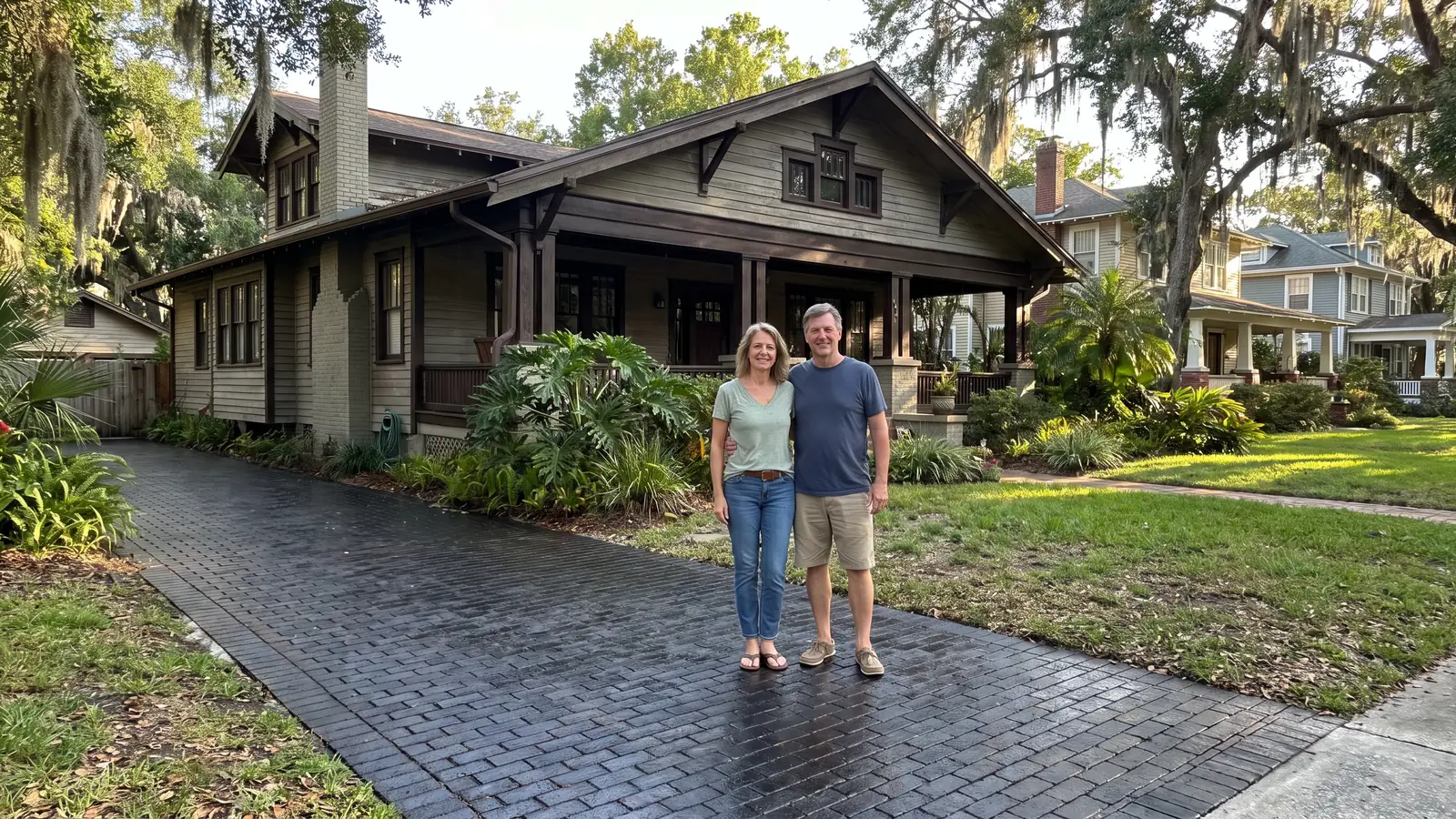
Paver sealing for Palm Valley homes
Paver Sealing in Palm Valley, FL
The Intracoastal drained Palm Valley's marshland, so call (904) 543-3876 for a free paver sealing estimate.
- Brings out deeper paver color
- Fresh joint sand helps lock pavers in place
- Gives weeds less room to grow
- Makes the surface easier to keep clean
- Free estimate, no obligation
Request a Free Estimate
Free, no obligation.
Fast, careful paver sealing in Palm Valley
Palm Valley homes from Palm Valley Landing and Plantation Oaks to Dolphin's Cove and the Sawgrass side can book paver sealing. The estimate is free, and a local contractor cleans, re-sands and seals driveways, patios and pool decks. Palm Valley callers who phone (904) 543-3876 can expect an answer within 1 business day, usually much sooner. If you are not sure what your pavers need, a short description is enough to start.
If your patio faces the Intracoastal, you know how the damp hangs in the air and how fast green creeps in. Pavers there lose color first and collect film on the shady edge, which can make a nice patio look neglected. A wash, new joint sand and a fresh coat bring the surface back to one even tone. To ask what yours would need, book a free estimate, with no obligation.
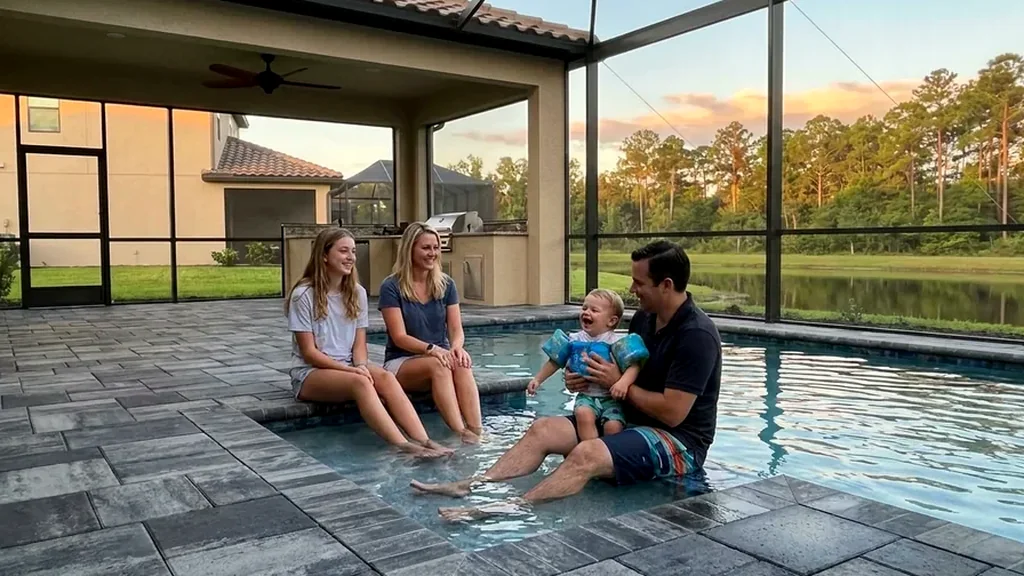
Why hire a local paver sealing contractor in Palm Valley?
Humid air, old marshland and big waterfront patios make every Palm Valley job different, so owners here turn to a local paver contractor. To hear how that applies to you, call (904) 543-3876.
A look before a price
A local contractor measures your Palm Valley pavers and gives you a figure first. There is no charge and no obligation.
A range to hold up
Posted prices for a clean, sand and seal run from $1.75 to $3.25 per square foot in this region. Weigh any bid against it.
A finish to live with
Matte stays calm beside the water. A wet look gives a richer color and shows scuffs sooner, so choose what you will enjoy daily.
Dry days come first
In a humid place, a careful contractor waits for a dry surface before sealing. Waiting protects the finish and your money.
Get Your Free Estimate in Palm Valley
Tell us about your pavers in Palm Valley.
Free, no obligation
What paver problems show up most in Palm Valley?
Half the year in humid air
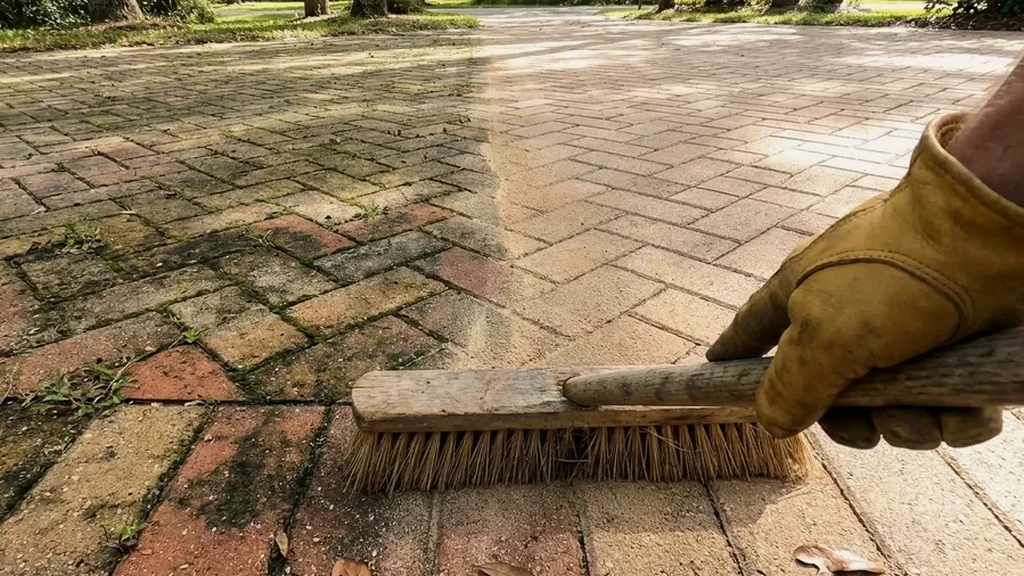
Weather Spark, cited on Wikipedia, puts Palm Valley's humid period at about 6.5 months, from April 26 to November 11. Its wetter season spans roughly four months, June 2 through October 2. That is a long stretch for pavers to stay damp, especially in shade. Damp surfaces grow algae, so a green film is the usual first sign. Left alone, it spreads along joints and makes steps and walkways slick. A wash clears it, and sealer then gives it less to hold onto, which means the next wash is easier.
Ground that used to be marsh
A state marker at the Palm Valley Community Center says completing the Intracoastal Waterway in 1912 drained much of the area that had been marshland. TPC Sawgrass was built on swampland about a mile west of the ocean. Pavers laid over old wet ground can settle in places. A low spot is a sign that the base needs a repair before any sealer goes on. Sealing over a dip only preserves the dip. A good estimate walks the low side of the drive and the patio edges and points out anything that has moved.
Salt on the Intracoastal breeze
University of Florida says coastal sites deal with winds, inescapable salt and sandy soils. Palm Valley sits east of the Intracoastal and west of A1A, so the breeze can come from either side. A patio facing open water takes the full push of it. Sealed pavers give salty grime less to hold, which means they rinse cleaner. A patio that takes the wind also tends to take sun, so fading shows up there too. Ask which finish copes best with glare.
Oak, magnolia and palm litter
The state marker says the hammock was once covered with oaks, magnolias and especially palms. UF/IFAS says live oaks spread 60 to 120 feet and water oak acorns stain pavement. Leaf litter that sits on a damp paver leaves tannin marks, and a Jacksonville company says tannin soaks into unsealed pavers. A sealed surface lets you rinse the marks off before they set. That is a real day-to-day difference under a big oak.
Orange streaks from sprinklers
UF/IFAS warns that irrigating with iron-heavy well water tends to leave orange stains. If yours draws from a well, check the paver edge nearest the spray. Treat those marks during the wash, because sealer would lock them in. Pointing sprinkler heads elsewhere gives new streaks less chance to form, and it buys time between washes.
Which Palm Valley neighborhood is mine, and does it change the paver plan?
Wikipedia names about six formal neighborhoods. The list runs Palm Valley Landing, Plantation Oaks, Seaside, Odom's Mill, Dolphin's Cove, then the slice of Sawgrass between A1A and the Intracoastal. Each has its own mix of lot sizes, shade and water, and the plan shifts with them. Say which one is yours when you book a free estimate.
The Sawgrass PLAYERS Club has a master homeowners association, made up of representatives of its sub-associations. If your street has an association, Florida Statute 720.3035 limits its review of appearance changes to what its documents state or reasonably imply. Ask for the written guidelines before choosing a sheen. Call (904) 543-3876 if you want a second set of eyes on a color or finish question.
Many Palm Valley homes overlook the Intracoastal, with large patios and long walkways to match. Wikipedia says most of the old farms have disappeared and made room for large residences. A big pool deck or a long motor court raises the square footage quickly, and the price follows the area. To get a price on yours, book a free estimate.
What does paver sealing cost in Palm Valley?
Across Northeast Florida, posted prices land between $1.75 and $3.25 per square foot to clean, sand and seal. Big Palm Valley lots with long drives, wide patios and pool decks add up fast even at the same rate. Green film, tired coats and empty joints can lift a job's price. For a price on your patio, drive or pool deck, book a free estimate, and the estimate is free.
A job that is easy to reach costs less to do than one with a long haul to the back yard. Gates and narrow side paths also add time, and a walled courtyard with one door can slow the work more than a wide drive. Call (904) 543-3876 and describe how the contractor would get to your pavers. That short talk shows which parts of the job will shape the number.
| Paved area | Typical example | Clean, sand and seal |
|---|---|---|
| 300 sq ft | Small patio or walkway | $525 to $975 |
| 600 sq ft | Two car driveway | $1,050 to $1,950 |
| 1,000 sq ft | Large driveway or pool deck | $1,750 to $3,250 |
| 1,500 sq ft | Driveway plus pool deck | $2,625 to $4,875 |
Math based on the $1.75 to $3.25 per square foot that Northeast Florida paver companies publish. Your contractor sets the actual price after seeing the surface. Repairs, leveling and stripping failed sealer are usually extra.
How does a paver sealing job work in Palm Valley?
Walk the property with an eye on water
The contractor starts by seeing where water gathers on your pavers and where shade keeps them damp. Any settled spot gets noted, since sealer only preserves a dip. A test patch shows whether an old coat is water-based or solvent-based. That answer sets which sealer can go on. Share what you know about earlier work, even if it is only a guess. Even a guess helps, because a quick test can then confirm it.
Wash away the green and the grit
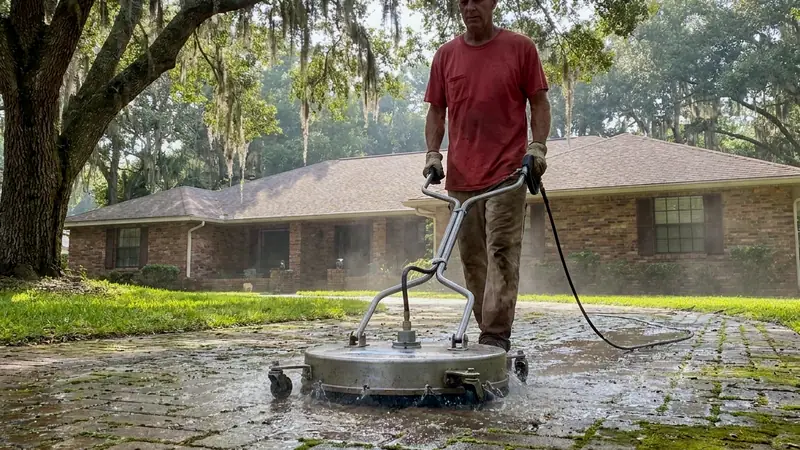
Cleaning lifts algae, leaf stains and dirt, and it is the step that decides how clean the finished surface looks. Shady corners and spots under oaks take the longest. The wash also treats any orange sprinkler marks, because sealer would trap them. The contractor steers rinse water away from plants and screens wherever possible. On a big patio the wash may take a good part of the day.
Fill the joints with new sand
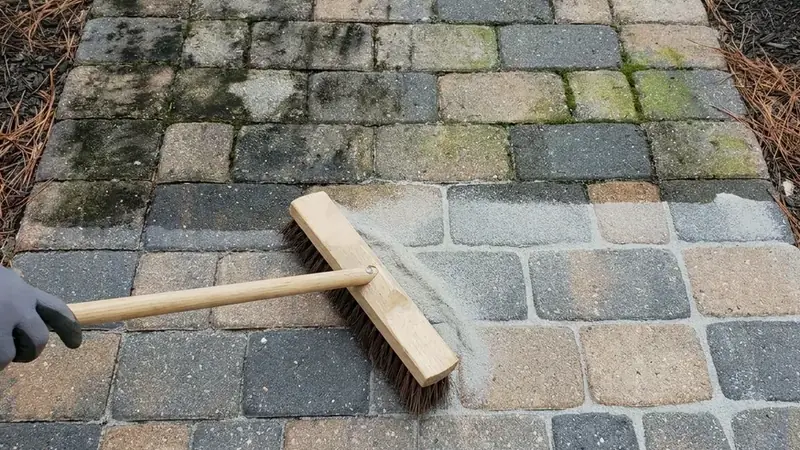
Washing pulls sand out, so the joints get refilled before sealing, and the surface is swept clean when it is done. A paver company says sandy soil and heavy summer rain wash out joint sand and soften the base over a few years. Full joints hold pavers steady. They also leave weeds with fewer places to take hold. On large Palm Valley drives, the sand alone can take real time.
Wait out the damp
Humid weather slows drying, and it does so for much of the year here. A Jacksonville company ties white haze to sealing damp pavers, which is why a careful contractor checks the surface and the sky. Shade and the Intracoastal air can stretch the wait. Moving the date beats redoing a clouded coat. A patient contractor is protecting your money, not stalling.
Apply the sealer and let it cure
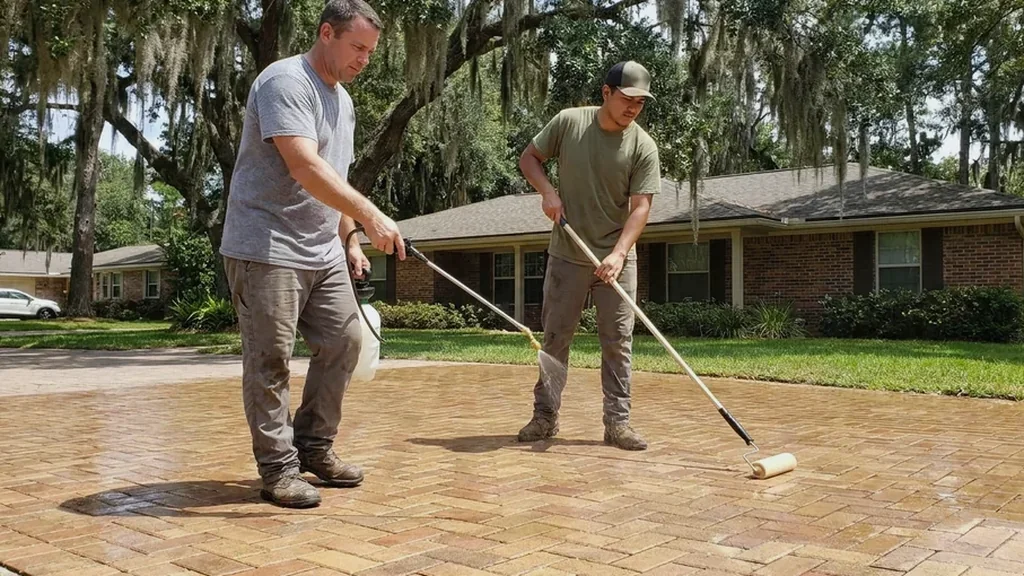
The contractor sprays the sealer and back-rolls it in the finish you picked, working across the joints so the coat is even. Cars wait 24 to 48 hours, according to a paver company serving ZIP 32259. Two to five years is the usual quoted wait before the next coat. Save the product name, which saves guesswork at the next coat.
Complete paver services in Palm Valley
A Palm Valley job follows a set path. First a wash lifts the film and the grime, then fresh sand goes into the joints. The surface has to dry all the way, and only then does the sealer go on. To hear how long each stage could run on your patio or drive, call (904) 543-3876.
Driveways, courtyards, walkways and pool decks all work differently. A pool deck needs a sealer with an anti-slip additive, according to one Jacksonville company. A shaded walk under oaks stays damp and needs more drying time, while a sunny motor court dries fast. Tell the contractor which areas you want done when you book a free estimate.
The two sealer families are water-based and solvent-based, and water-based never goes over solvent-based. The same Jacksonville company says pros typically spray and back-roll, since pure rolling risks lap marks. Then comes the look, matte or wet, and the wet look shows scuffs sooner. Ask for the product name, and call (904) 543-3876 if you want help comparing quotes.
Palm Valley's wetter season runs from early June to early October, per Weather Spark. Sealer needs a dry surface, so the drier months are easier to plan around. Companies quote two to five years between coats, and one paver company allows 24 to 48 hours of cure before driving. To look at dates that suit your yard, book a free estimate.
Questions to ask before you hire
- Will you show me photos of any stain that will not come out?
- Will your estimate point out any pavers heaved by oak roots?
- Do you add grit to the sealer on steps and ramps?
- How do you keep green algae from coming back in the shade beside my house?
- Which finish suits an older, worn surface: matte, satin or wet look?
- Will oak leaf stains and tannin marks come out before the sealer goes down?
- How often should I rinse a sealed driveway so the finish stays even?
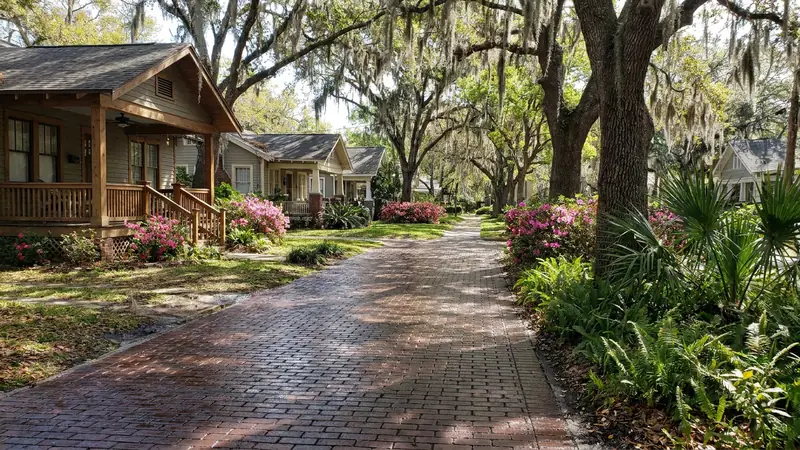
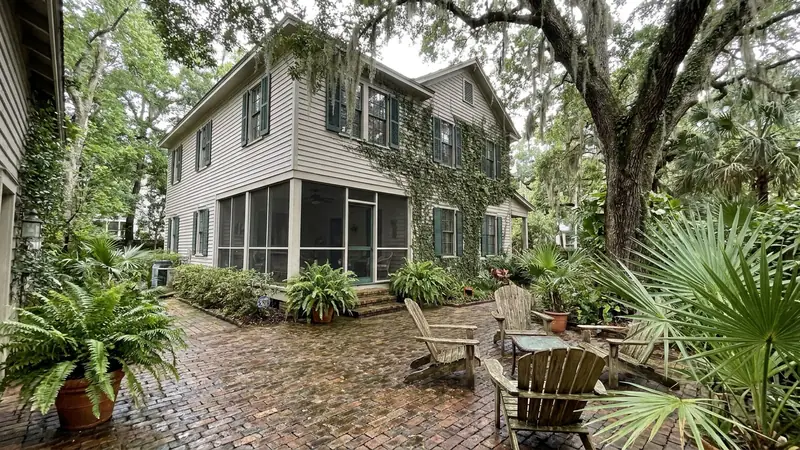
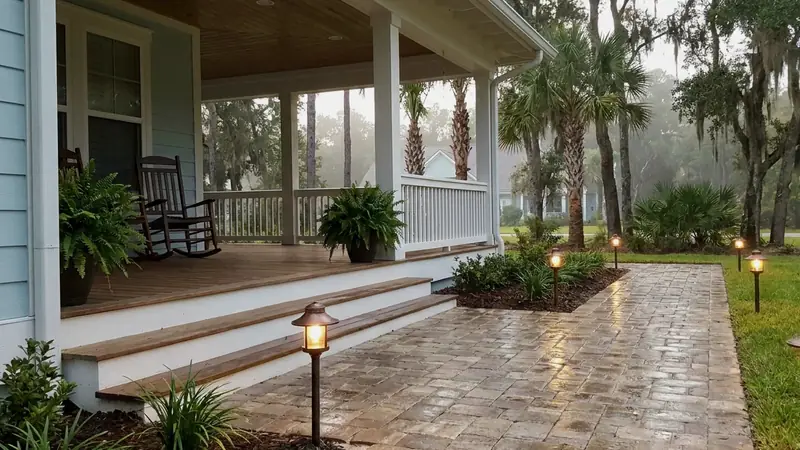
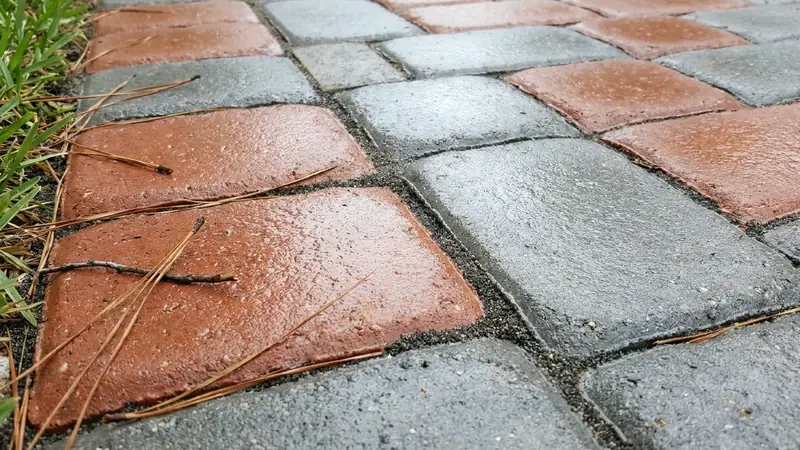
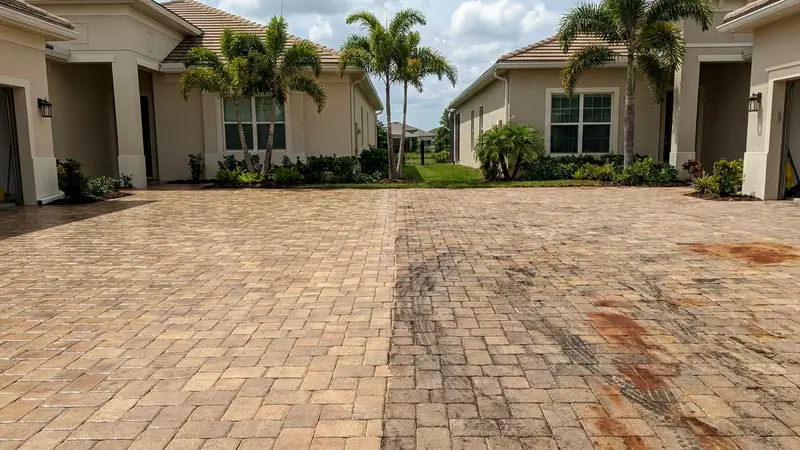
What do sealed pavers look like around Palm Valley?
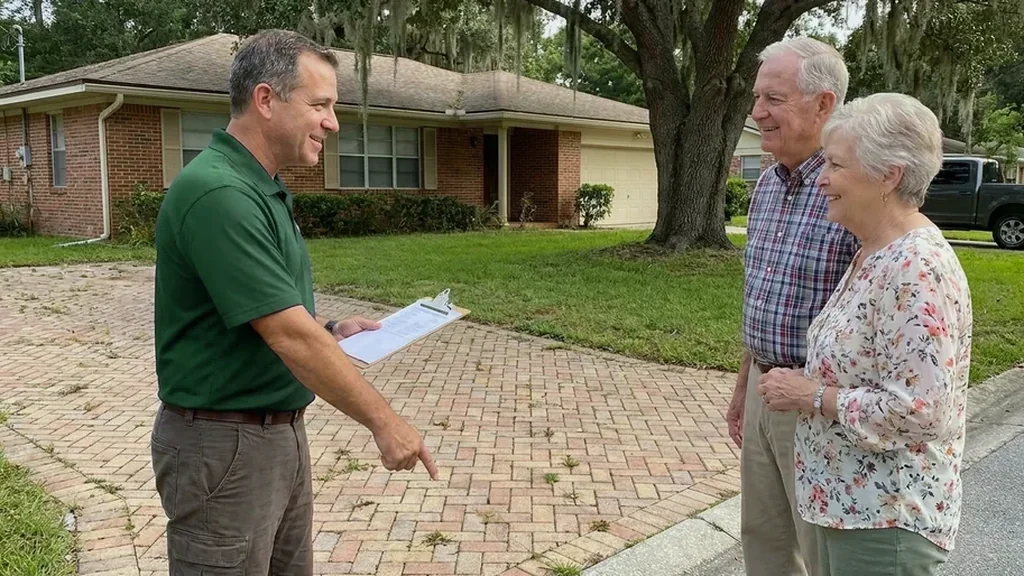
Why local matters in Palm Valley
A contractor who knows Palm Valley knows the ground. The Intracoastal drained much of this area, and that history can show up as a soft corner or a slow-drying spot. Someone from a drier inland town may not look for it, and a quote that misses it can mean a second visit. To reach a contractor who works St. Johns County's coast, call (904) 543-3876.
Being local also means respecting the humid season. About 6.5 months of the year count as humid here, and the wetter four fall in summer. A contractor who plans for that sets aside time for drying and watches the forecast. You can book a free estimate and ask how a day gets scheduled.
Larger homes with water views and wide hardscape are common here, so a long driveway or a big patio is normal. The plan has to scale to match. A contractor used to the area prices by the square foot and lists each surface separately. If you would like that kind of breakdown, call (904) 543-3876.
Why is it called Palm Valley, and what was here before the big homes?
Early settlers named it for the many palm trees, and before that the area was known as Diego Plains. A canal cut through in 1908 linked the San Pablo and Tolomato rivers, and the Intracoastal opened in 1912. Families raised cattle, farmed, logged and shipped about 400,000 palm fronds a year to churches up north. If your street is nearby, book a free estimate.
You can still trace that history on the map. The Palm Valley Community Center sits at 148 Canal Boulevard, where a state marker tells the story of the Plains of Diego. The Palm Valley Bridge on County Road 210 crosses the Intracoastal, and the Guana Tolomato Matanzas reserve protects 76,000 acres nearby. Mention a landmark close to you when you call (904) 543-3876.
Frequently Asked Questions
How much does it cost to seal pavers per square foot in Palm Valley?
Northeast Florida companies commonly publish $1.75 to $3.25 per square foot for the clean, sand and seal. Large Palm Valley patios and drives add up through square footage, not a higher rate. Request the measured area in writing so the math is easy to check. Where the price lands depends on shade, joint sand and the old coat. Free estimates make comparing easy.
Is there a pressure washing business near Palm Valley that also seals pavers?
Yes, a local contractor starts any sealing job with a wash, then re-sands the joints and seals. To start, ask for a quote, and expect an answer inside 1 business day, usually much sooner.
Is sealing pavers a good call in Florida, and in a humid place like Palm Valley?
Yes. A Jacksonville paver company says tannin stains soak into unsealed pavers, and Palm Valley has about 6.5 months of humid weather. Sealing gives algae, leaf litter and spills less to grip, which means less scrubbing later.
Is it better to spray or roll paver sealer on Palm Valley pavers?
A Jacksonville company says pros typically spray and then back-roll, which means the sealer reaches the joints. Spraying covers evenly, while back-rolling pushes the sealer down into the joints. Pure rolling risks lap marks, so ask which method your contractor uses and whether the sealer is worked into the joints.
How long does paver sealer last in Palm Valley?
Palm Valley owners will hear two to five years between coats from most companies. Heavy shade, humid air and daily car traffic can push a coat toward the shorter end. File the product name away so the next coat matches it. One paver company also allows 24 to 48 hours of cure before cars drive on a sealed surface.
Does my Palm Valley homeowners association need to approve a sealer?
It depends on your association's documents. Florida Statute 720.3035 sets the outer limit: review reaches only what the declaration or published guidelines state or reasonably imply. Check your guidelines and keep the sealer name and sheen. If anything is unclear, ask the association before work begins.
Can pavers beside the Intracoastal be sealed in humid weather?
Yes, once the Palm Valley pavers have had a full wash and a complete dry-out. Humid air slows drying, and damp pavers can cloud under sealer, so the contractor may need to wait. A shaded patio can take extra time. Plan on a flexible date, especially in the wetter months.
When can cars go back on newly sealed pavers in Palm Valley?
A paver company serving St. Johns County asks for 24 to 48 hours of cure before cars drive on sealed pavers. Palm Valley's humid weather can stretch that window. Ask your contractor for the exact time, and keep the sprinklers off the pavers until then.
Does a wet look or a matte finish suit a home by the Intracoastal?
Either can work, so it comes down to taste and use. A wet look brings out color and shows scuffs sooner, while matte stays calm and hides wear. Ask to see both on a sample, and think about how much traffic the surface sees.
Do new pavers in Palm Valley need sealing right away?
Not right away. One paver company recommends waiting about 90 days after installation, so the pavers can cure and any efflorescence can work its way out. After that, sealing helps protect the color and the joints. Ask your installer for their advice on timing.
Will sealing fix sunken or lifted pavers in Palm Valley?
No. Sunken pavers get repaired first, before a drop of sealer goes on. Sealing over a dip only preserves it. On ground that was once marsh, point out any low spots at the estimate so the contractor can plan the repair.
What causes the green film on my Palm Valley pavers?
Algae, which grows where shade and moisture meet, such as under trees or patio roofs. Palm Valley's humid months give it plenty to work with. Wash it off first, since sealer would seal the algae in.
Ready for a Free Estimate in Palm Valley?
Call (904) 543-3876 and tell us about your pavers.
Free, no obligation