
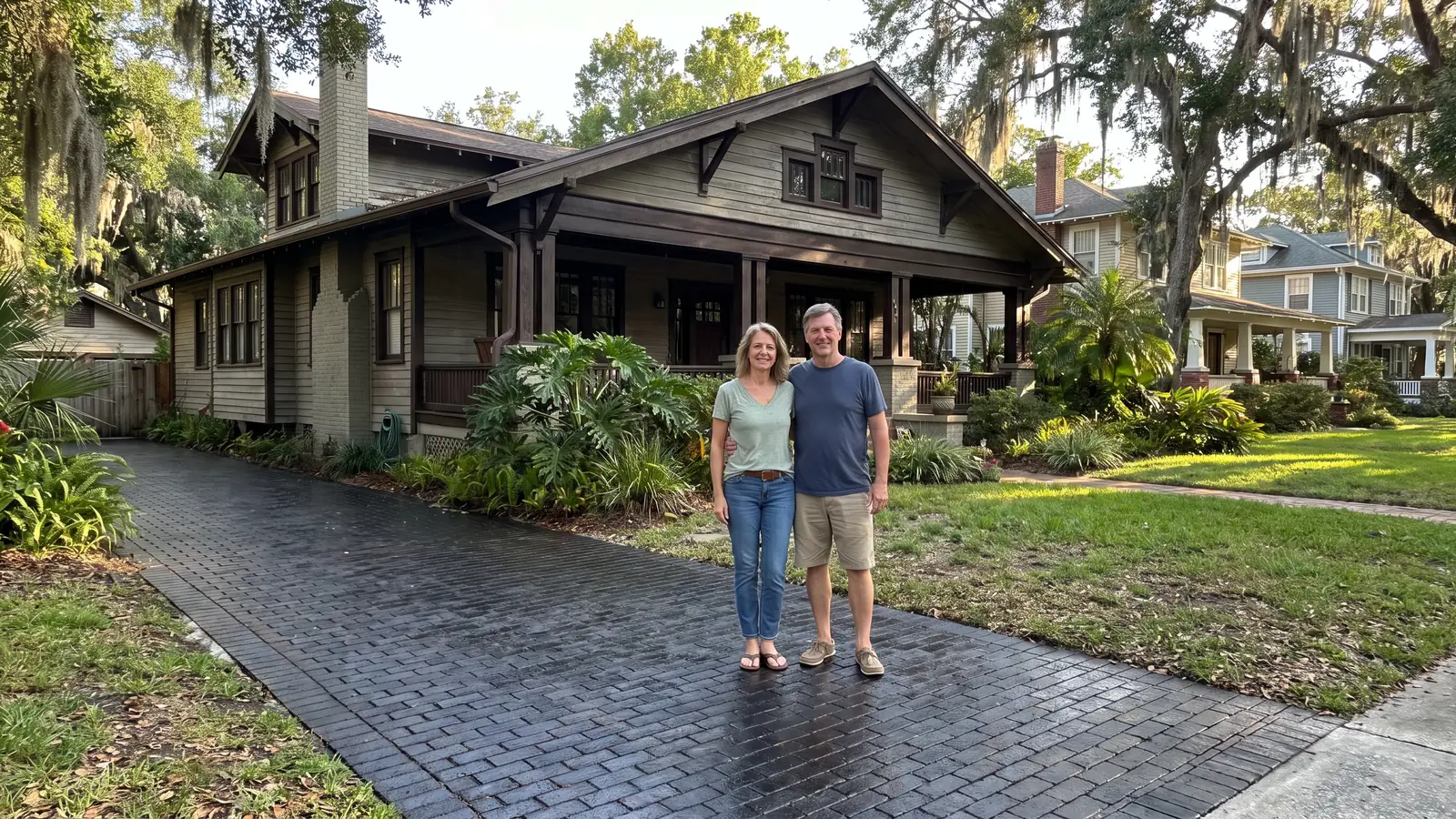
Paver sealing for Jacksonville Beach homes
Paver Sealing in Jacksonville Beach, FL
Jacksonville Beach pavers take salt and sand daily, so call (904) 543-3876 for a free sealing estimate.
- Brings out deeper paver color
- Fresh joint sand helps lock pavers in place
- Gives weeds less room to grow
- Makes the surface easier to keep clean
- Free estimate, no obligation
Request a Free Estimate
Free, no obligation.
Fast, careful paver sealing in Jacksonville Beach
Driveways, walkways, patios and pool decks in Jacksonville Beach can get paver sealing, from the oceanfront streets to the Intracoastal side. Washing, new sand and sealing all come from a local contractor, and the estimate is free. Dial (904) 543-3876 from anywhere in Jacksonville Beach and expect a reply within 1 business day, usually much sooner.
Salt, sun and sandy shoes are hard on a surface, and it shows. The color dulls, the joints thin out and a green film creeps along the shady edge. A wash, new sand and a fresh coat bring back one even tone. When you are ready to find out what yours needs, book a free estimate; there is no obligation.
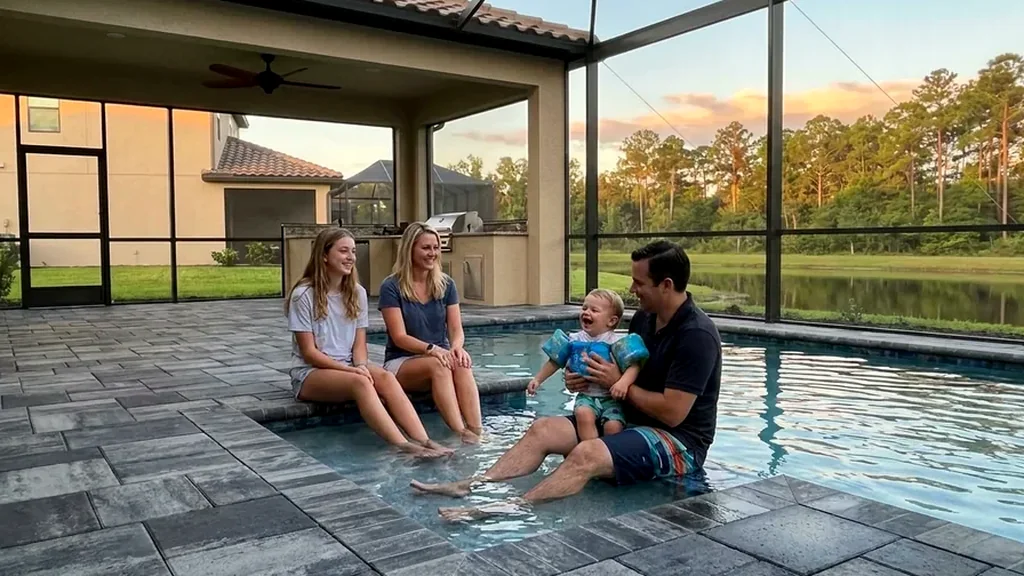
Why hire a local paver sealing contractor in Jacksonville Beach?
In this beach city, salt, sand and a wet summer shape every job, which is why Jacksonville Beach owners choose a local paver contractor. To hear how that fits your home, call (904) 543-3876.
Look first, decide later
A local contractor measures your Jacksonville Beach pavers and quotes a price. Nothing is owed unless you say yes.
A fair yardstick
A clean, sand and seal is commonly published at $1.75 to $3.25 per square foot around here. Compare any bid to that.
Natural finish or glossy finish
Matte keeps a calm, even surface, while a wet look pulls out color at the price of earlier scuffs. Pick for your home.
Rain plans built in
Wet-season storms can move your date. A good contractor waits for a dry surface instead of rushing a coat.
Get Your Free Estimate in Jacksonville Beach
Tell us about your pavers in Jacksonville Beach.
Free, no obligation
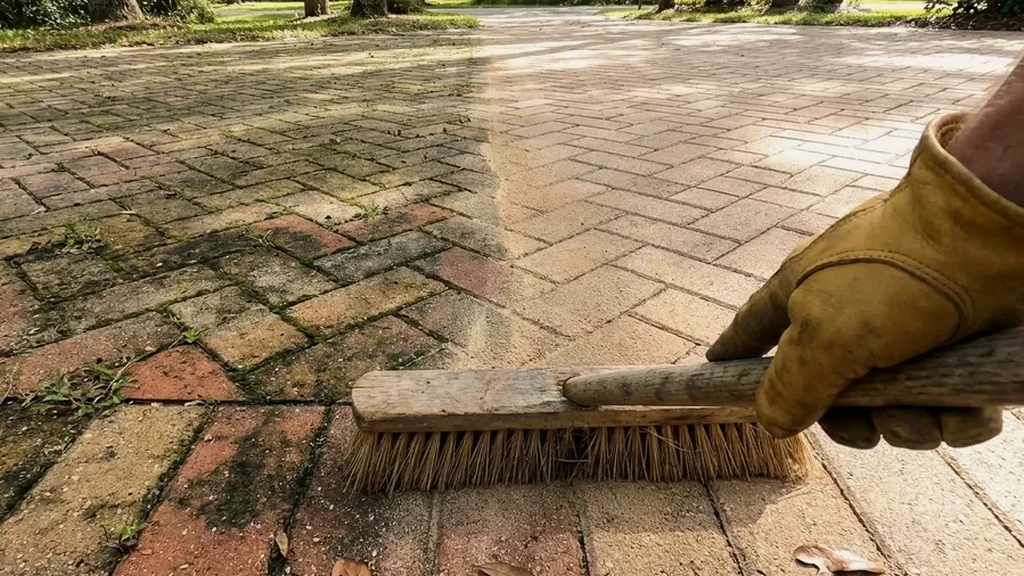
What paver problems show up most in Jacksonville Beach?
Salt and sand in the same breeze
University of Florida says coastal sites deal with winds, inescapable salt and sandy, high-pH soils. Jacksonville Beach is 66.61 percent water by area, so most addresses sit close to the sea or the Intracoastal. Salt-laden air settles on a driveway along with sand and dust, and a sunny, open lot gets the most of it. A sealed surface gives that grime less to cling to, which means it rinses off more easily. Over a few years that adds up to fewer deep scrubs and a drive that looks cleaner between visits. It also means the color you paid to restore stays visible longer.
A rainy August and a dry November
NOAA normals for Jacksonville Beach show 7.54 inches of rain in August and 2.50 in November. That swing sets the calendar for sealing, and the NOAA record covers about 122 rainy days in a year. Sealer needs a dry surface, and a wet summer makes dry days harder to count on. If your date moves, it is because rain would ruin the coat, not because anyone is dragging their feet. Ask your contractor how many dry days they want in a row. A short wait beats a cloudy finish that stays for years.
Pavers at the edge of city property
Per the city's own FAQ, most use of the right-of-way beside a home calls for a revocable encroachment permit, and many owners use it. Aprons and strips at the street edge can fall in that gray area. Before work starts, find out which pavers are yours to treat. The contractor can only seal what you have the right to seal. If you are unsure, a quick call to the city can settle it. Put the answer on the estimate so nothing surprises you later.
Older lots with unknown coats
The Casa Marina Hotel dates to 1925, and the lifesaving station to 1947, so parts of Jacksonville Beach are old. A home that has changed hands may carry a coat nobody remembers, and pavers do not come with a label. The two sealer families do not mix, so someone has to name the old product before the new one is chosen. A small test patch settles it quickly. That one step can save a failed coat, a redo and an argument about who pays.
Courtyards that stay damp
Under trees and patio roofs, shade and moisture team up to grow algae. With two-thirds of the city's area covered by water, the air stays humid. A walled courtyard or a patio roof can hold that dampness for days, even when the lawn next to it has dried. The green film that forms there makes pavers slick, and it has to be washed off before sealing. Sealer over algae would only trap the problem. Plan on extra wash time for any corner that never sees sun.
Do older beach homes in Jacksonville Beach need a different paver plan?
Often, yes, because age changes what is under the surface. The city has a notable collection of mid-century modern homes, many by architect William Morgan. Clean, simple lines show an uneven finish more than a busy pattern does, so many owners lean toward matte. To talk finish over, book a free estimate.
The Casa Marina Hotel opened in 1925, and Beach Boulevard runs on the old railroad bed near Latham Plaza. Homes near those blocks are among the oldest, so their pavers may have been redone more than once. That history is worth sharing at the estimate. Call (904) 543-3876 and tell the contractor your street.
Closer to the Intracoastal, the lots feel different. Moisture lingers and shade builds up, which means algae shows up earlier on those pavers, often along north-facing edges. If you live on that side, book a free estimate and ask how the plan changes, since the estimate is free.
What does paver sealing cost in Jacksonville Beach?
Companies in the region post prices of $1.75 to $3.25 per square foot, covering the wash, the sand and the sealer. In Jacksonville Beach the size of the surface does most of the pricing, and a courtyard costs less than a long drive. Green growth, empty joints and a worn coat push the number up. If you would like a price for your own pavers, book a free estimate; estimates are free.
Small lots near the beach can raise the time per square foot, since moving gear around a tight space takes longer. Open driveways are simpler. Call (904) 543-3876 and talk through the layout, and the contractor can say whether access will change the quote.
| Paved area | Typical example | Clean, sand and seal |
|---|---|---|
| 300 sq ft | Small patio or walkway | $525 to $975 |
| 600 sq ft | Two car driveway | $1,050 to $1,950 |
| 1,000 sq ft | Large driveway or pool deck | $1,750 to $3,250 |
| 1,500 sq ft | Driveway plus pool deck | $2,625 to $4,875 |
Math based on the $1.75 to $3.25 per square foot that Northeast Florida paver companies publish. Your contractor sets the actual price after seeing the surface. Repairs, leveling and stripping failed sealer are usually extra.
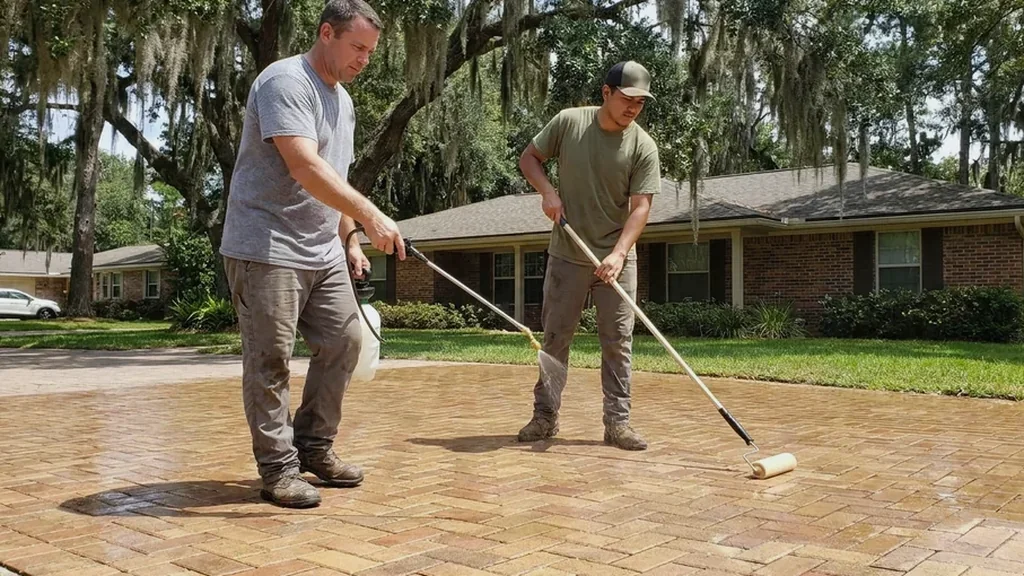
How does a paver sealing job work in Jacksonville Beach?
Look at the surface and the paperwork
The contractor starts with a walk over your pavers, marking low spots and noting where water drains. Any lifted or rocking pavers get flagged for repair, because sealer will not hold a loose stone in place. Then comes the question of whose pavers they are, since the city's right-of-way rules can touch street-edge aprons and the strips beside them. A test patch shows what sealer is already there. That test matters because a water-based coat cannot go on top of a solvent-based one.
Wash off salt film, algae and stains
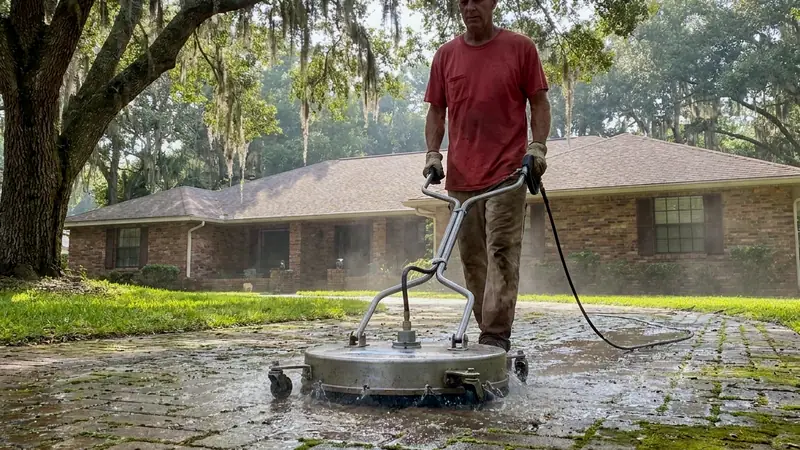
Cleaning lifts dirt, algae and anything the breeze has left behind, from sand grit to the film that builds up along edges. Damp courtyard corners usually take the longest, and so do the edges beside planters. Rinse water is steered away from plants, doors and the neighbor's lot. Salt and algae wash out most easily when the wet pass is slow. A clean surface matters because sealer locks in whatever sits on it.
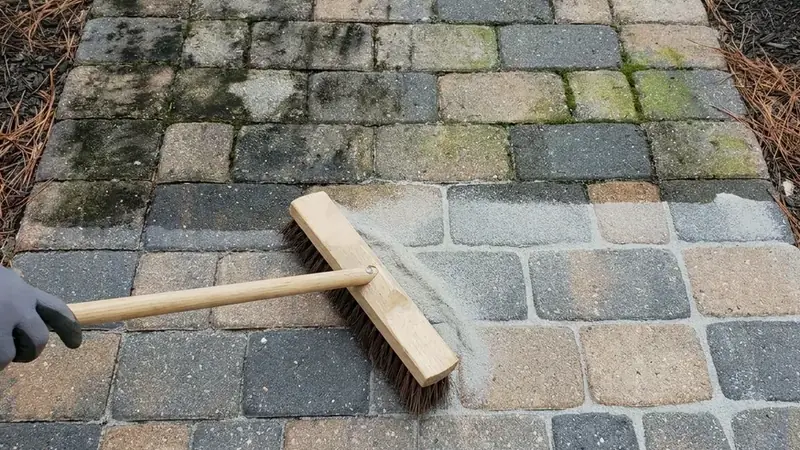
Put new sand in the joints
Washing flushes out joint sand, so new sand goes in before sealing. On sandy coastal ground with heavy summer rain, joints can thin out over a few years. A paver company says empty joints invite weeds and ants, which tells you something about how long they have been open. Full joints also keep the pavers from shifting, and they let rain drain through instead of sheeting across the surface.
Let the surface dry all the way
Sealer needs a dry surface. Moisture trapped under sealer shows up as white haze, according to a Jacksonville company, so the contractor waits. Shaded courtyards dry slowest, and August rain can reset the day. A contractor who asks about your sprinkler timer is thinking ahead. Moving the date is better than redoing a clouded coat. One extra day costs far less than a redo.
Spray, back-roll and cure
Next the sealer goes on in the finish you chose, sprayed and then back-rolled into the joints so it reaches the gaps between pavers. One company allows 24 to 48 hours of cure time before cars drive on it. Foot traffic comes back sooner, but ask first. Quoted recoat times run two to five years across the region. Keep the product name on file, along with the date, so the next coat is easy to plan.
Complete paver services in Jacksonville Beach
A typical job here goes wash, sand, dry, seal. The wash clears salt film, algae and stains, and it takes longer on a courtyard that rarely sees sun. New sand fills the joints so the pavers stay locked, and sealer goes on once everything is dry. To ask how long that takes on your property, call (904) 543-3876.
Different surfaces age differently. A driveway takes tires and sand, a pool deck takes wet feet and sun, and a courtyard behind a wall stays damp. The contractor can plan each one on its own. Name every surface you want done when you book a free estimate.
Sealer comes water-based or solvent-based, and the old coat decides which can go on. Next is finish, since a wet look shows scuffs sooner than matte. A Jacksonville company says a pool deck needs a sealer with an anti-slip additive, and crews typically spray, then back-roll. For the product name in your quote, call (904) 543-3876.
Rain here peaks in August and September and dips in November. Late fall is a calmer time to schedule, since November is the driest month in the NOAA normals. Recoat quotes run two to five years, and one paver company allows 24 to 48 hours of cure before cars drive on it. To pick a date, book a free estimate.
Questions to ask before you hire
- Will oak leaf stains and tannin marks come out before the sealer goes down?
- Which finish suits an older, worn surface: matte, satin or wet look?
- Will your estimate point out any pavers heaved by oak roots?
- Can the job go ahead while I am at the office all day?
- How do you keep green algae from coming back in the shade beside my house?
- How often should I rinse a sealed driveway so the finish stays even?
- Will you show me photos of any stain that will not come out?
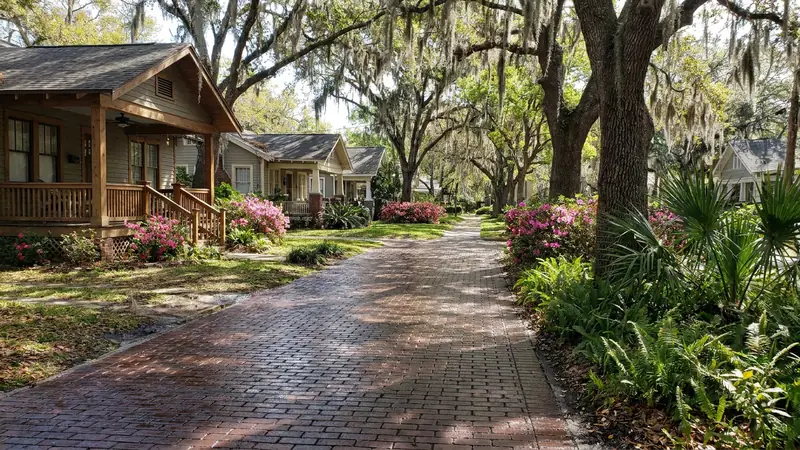
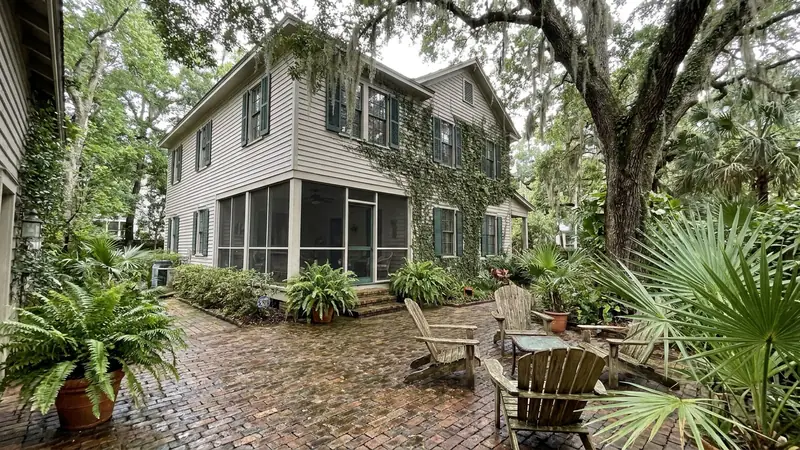
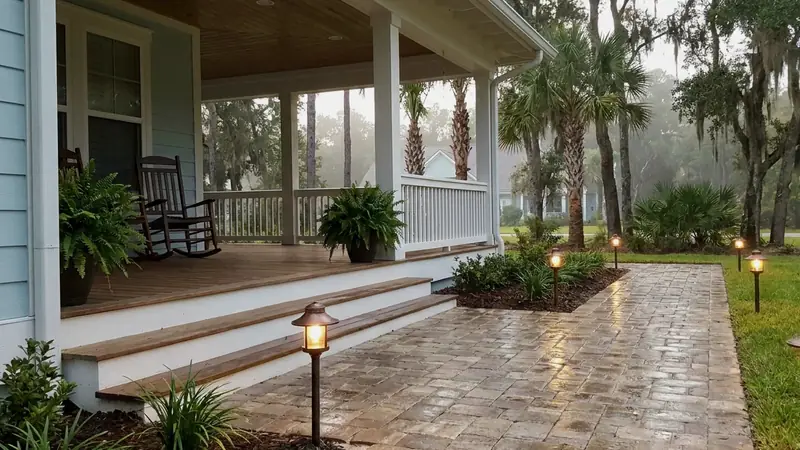
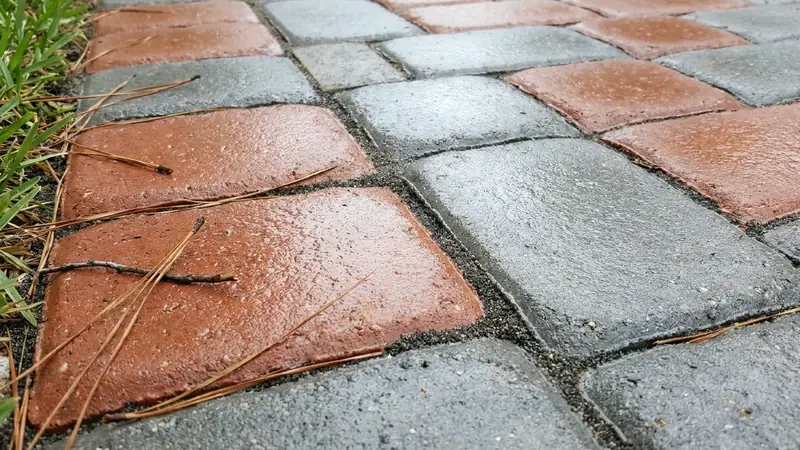
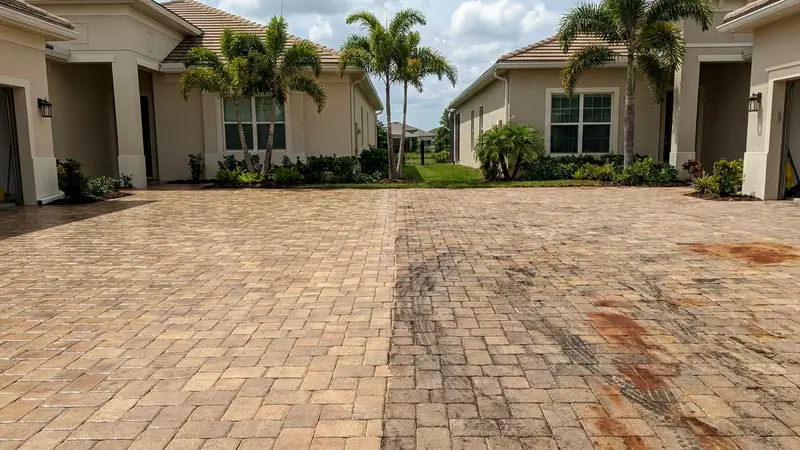
What do sealed pavers look like around Jacksonville Beach?
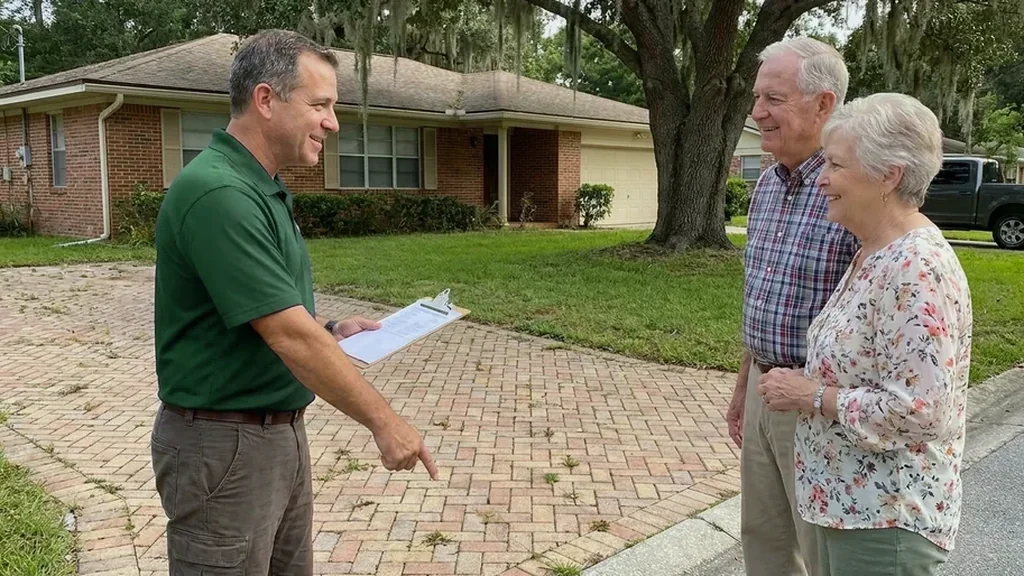
Why local matters in Jacksonville Beach
A contractor who knows Jacksonville Beach asks the right first questions. How old is the house, what is on the pavers, and do they touch city right-of-way? Those answers change the plan more than the square footage does, which is why a quote written without them can miss. To talk with a contractor who works the Beaches, call (904) 543-3876.
A good local contractor also respects the weather calendar, wet in summer and dry in late fall. Rain peaks in August and September, and the driest month is November. A contractor who plans around that pattern avoids sealing in a storm window, and avoids the rush of repeat visits that follows. You can book a free estimate and ask when the calmer stretch usually falls.
The housing here ranges from mid-century homes to newer builds, and each calls for a slightly different touch. A contractor familiar with that mix knows when to ask about the finish before the first rinse, and when to suggest a test patch. Your driveway should suit your house, and one standard coat on every home will not do that. If you would rather talk first, call (904) 543-3876 and describe your beach-side pavers.
How did Jacksonville Beach get its name, and what is left of the old resort?
It started as Ruby in 1884, became Pablo Beach in 1886 after the San Pablo River, and took its current name in 1925. William and Eleanor Scull built the first house, two blocks east of Pablo Historical Park. A railroad begun in 1883 was meant to bring visitors from Jacksonville. To see what your street needs, book a free estimate.
You can still see pieces of that past. The Beaches Museum at 381 Beach Boulevard has a history park with the first post office, a 1911 train engine and a chapel from 1886. Shad's Pier dates to 1922, the year Jimmy Doolittle flew a record trip from Pablo Beach to San Diego. Mention a landmark near you when you call (904) 543-3876.
Frequently Asked Questions
What would it cost per square foot to seal pavers in Jacksonville Beach?
The range companies publish across Northeast Florida is $1.75 to $3.25 per square foot to clean, sand and seal. Your total depends on the measured area, any algae and the state of the old coat. A tight courtyard and a wide drive can differ by a lot. Make sure the quote lists square footage you can check. The estimate itself is free.
Does a beach location make sealing pavers in Florida a better idea?
Yes. A Jacksonville paver company says a sealed surface rinses clean without pressure washing. Salt, sand and humidity are everywhere in Jacksonville Beach, and a sealed finish leaves each of them less to grab. That helps the surface look better between washes.
How many years do paver sealers last on a beach-city driveway?
On a beach lot, companies commonly quote two to five years between coats. Full sun, heavy foot traffic and deep shade can wear a coat down sooner. A drive that sees daily tires will age faster than a quiet walkway. Keep the product name so the next coat matches, and ask for a water test when you suspect the coat is thin.
Why is paver sealing so expensive?
The sealer itself is only a slice of what you pay for. Washing, joint sand, drying and even application are what take the hours, and square footage multiplies all of it. Ask each company to list those steps next to the per square foot price.
Do I need a permit to work on pavers near the street in Jacksonville Beach?
It depends on where the pavers sit, and the answer is not the same for every home. The city's FAQ says most use of right-of-way next to a home needs a revocable encroachment permit. Ask the city about your address before you request work, and bring the answer to the estimate.
Does a matte finish suit a mid-century home in Jacksonville Beach?
Often it does. Matte gives a quiet, even look that fits clean architectural lines, while a wet look brings out color and shows scuffs sooner. Look at both and pick the one you want to see every day. A contractor can often show you a sample of each.
What happens if it rains after my pavers are sealed?
Rain before the coat cures can spoil it, which is why contractors watch the forecast. A wet-season date can shift by a day or two. Under one paver company's guidance, cars wait 24 to 48 hours. If heavy rain is coming, the date moves, and a good contractor tells you early.
Why do weeds keep growing in my Jacksonville Beach paver joints?
Empty joints invite them. A paver company says weeds and ants both point to joints that have lost sand. A wash followed by fresh sand and sealer fills the gaps, and full joints give weeds fewer places to start. Pulling weeds alone does not fix the cause, so they tend to come back.
Ready for a Free Estimate in Jacksonville Beach?
Call (904) 543-3876 and tell us about your pavers.
Free, no obligation